Key points
- Tooling is the entry ticket. A single-cavity die for a 150–300 g zinc or aluminium part runs $3,500–9,000; a two-cavity die is about 1.6–1.8× that, not 2×.
- Unit price falls fast, then stops. Between 500 and 5,000 pcs the piece price typically drops 35–50%. Between 5,000 and 50,000 it drops another 8–15% — then the curve is flat.
- Finishing is a separate product. As-cast, tumbled, powder-coated and anodised are four different products with four prices and four lead times.
- Ask for the die itemised. Cavity count, steel grade, slides, and who owns the tool when the programme ends.
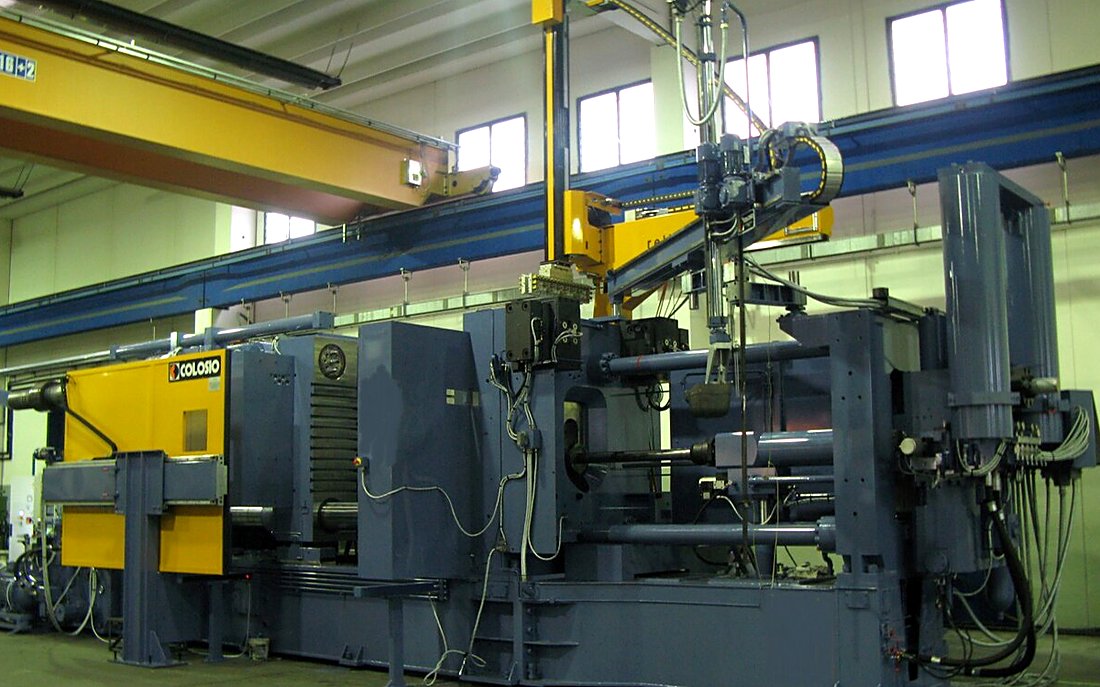
A die-casting quote arrives as one number and three words: "FOB Shanghai". Everything that decides whether that number is good or bad is hidden inside it. This is the breakdown we give buyers who ask, because a quote you cannot take apart is a quote you cannot compare — and in 2026, with zinc and aluminium both moving, the difference between two quotes is often not margin but scope.
The numbers below come from our own cost sheets for hardware-sized parts: 80–400 g, hand-held, cosmetic on one face. Your part will differ. The structure will not.
What are the four cost blocks inside a die-casting quote?
Every die-cast part has exactly four cost blocks, and they behave differently as volume changes. If a supplier quotes one lump sum, ask them to split it — any factory that runs its own machines can do this in ten minutes.
| Block | What it covers | How it scales |
|---|---|---|
| Tooling | Die, cavity inserts, slides, trimming fixture | Paid once. Independent of order quantity. |
| Material | Zamak 3/5 or ADC12 ingot, plus melt loss | Linear with weight. Moves with the LME. |
| Machine time | Shot cycle, tonnage, labour per press | Falls per piece as the run gets longer, because setup is amortised. |
| Finishing & packing | Tumbling, coating, assembly, carton | Linear, but priced per operation — this is where quotes diverge most. |
Two factories can quote the same part 40% apart and both be honest. One is quoting a two-cavity die with a slide and a powder coat; the other is quoting a single-cavity die, as-cast, tumbled. The number is not the comparison. The scope is.
How much does a die-casting tool actually cost in 2026?
For the size of part we run — hand-sized hardware, 80–400 g — these are the ranges we see for a hardened H13 die, including the first trial shots:
| Configuration | Typical die cost | Best for |
|---|---|---|
| Single cavity, no slide | $3,500 – 5,500 | 500 – 5,000 pcs, simple geometry |
| Single cavity with one slide | $5,000 – 7,500 | Undercuts, side holes, hinge lugs |
| Two cavity | $6,500 – 9,000 | 5,000 – 30,000 pcs |
| Four cavity | $11,000 – 18,000 | 50,000 pcs+, one part number |
Note what does not double when you double the cavities. The die base, the ejection system, the trimming fixture and the trial shots are shared. That is why a two-cavity die costs about 1.7× a single, not 2× — and why a supplier who quotes exactly double is quoting a catalogue, not your part.
Three things add cost that buyers rarely budget for:
- A slide. Any undercut needs a slide or a lift. It adds 30–50% to the die and one maintenance item to every production run, because slides wear faster than cavities.
- Insert rather than cut. Critical features are often better as a replaceable insert — more expensive up front, much cheaper when that feature wears in year three.
- Texture. An EDM texture on the cavity adds $400–900 and forces you to add draft angle. The draft is free on the drawing and expensive in the die.
How does the unit price change between 500, 5,000 and 50,000 pieces?
Here is a real shape, for a 180 g zinc clamp body, as-cast plus tumble, packed in export cartons. Your part will differ, but the shape of the curve is universal:
| Quantity | Unit price | What is happening |
|---|---|---|
| 500 pcs | $2.10 – 2.60 | Setup, first-article and tool trial spread over almost nothing |
| 5,000 pcs | $1.15 – 1.45 | Setup amortised; the press runs without interruption |
| 50,000 pcs | $0.95 – 1.20 | Only material and machine time remain; the curve is flat |
The practical rule: if your annual volume is under 2,000 pieces, die casting is usually the wrong process — sand casting, CNC from billet, or a fabricated weldment will be cheaper once you stop paying for a die you cannot amortise. We say this to buyers regularly, including when it costs us the die order.
There is a second curve that matters more than unit price: total spend including tooling. At 500 pieces, the die is 60–70% of what you pay. At 5,000 it is 15–20%. At 50,000 it rounds to nothing. If a programme is uncertain, that ratio is the argument for a machined first batch — you keep the option to change the geometry without scrapping steel.
Which design decisions move the price most?
Four decisions, in descending order of impact. All four are made before the die is cut, and all four are cheap to change on a drawing and expensive to change in steel.
- Wall thickness. Going from 2.5 mm to 2.0 mm cuts weight and cycle time — and starts a porosity argument you will lose at inspection. Thin walls need higher injection pressure, which means more flash, more trimming, more scrap.
- Draft angle. Under 0.5° means hand polishing on every shot, forever. It is the most expensive free change on a drawing. On textured faces you need 1.5–2° because the texture depth is added on top of the angle.
- Cavity count. Two cavities halve the machine time per part but raise the die cost and the scrap cost of a bad shot. The right number is a function of annual volume, not of ambition.
- Cosmetic standard. "No visible defects" is not a specification. "No flow lines on the A-face, porosity ≤ 0.5 mm not permitted within 10 mm of the thread" is. The first sentence gets you an argument at shipment; the second gets you a part.
What does finishing add, operation by operation?
Finishing is where two quotes diverge most, because it is a list of small operations that nobody itemises. These are our 2026 per-piece additions for hardware-sized parts at 5,000 pieces:
| Operation | Add per piece | What it actually does |
|---|---|---|
| Deburr + tumble | $0.04 – 0.08 | Removes flash and sharp edges; the minimum for anything hand-held |
| Vibratory polish | $0.08 – 0.15 | Uniform satin; hides tool marks but not porosity |
| Powder coat | $0.35 – 0.70 | 60–90 µm, UV-stable; needs a hanging point and a mask |
| Anodising (aluminium only) | $0.45 – 0.95 | 15–25 µm Type II; colour is a batch decision, not a per-piece one |
| Laser marking | $0.03 – 0.06 | Logo, model number, traceability code |
| Assembly (inserts, pads) | $0.10 – 0.40 | Labour-dominated; the part design decides the time |
Two warnings. First, powder coat over a porous casting shows every pinhole — if the A-face matters, the die needs a better gate before the coating line sees it. Second, anodising colour drifts between batches; if the part is a visible fixture, ask for a ΔE tolerance and a retained colour plaque, or you will be matching batch two against a photograph.
What pushes the price up after you place the order?
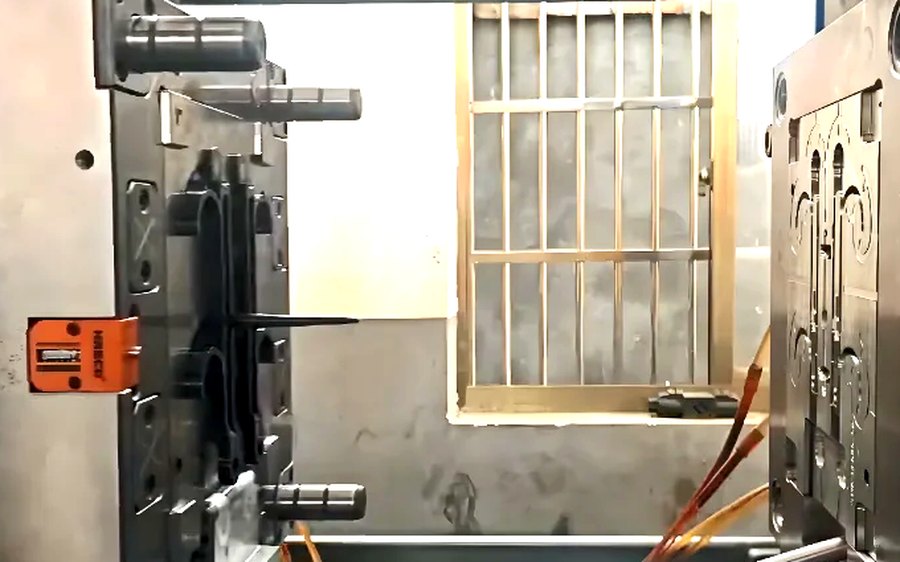
A quote is a snapshot of four moving inputs. Three of them can move against you inside a quarter:
- Metal. Zinc and aluminium are traded on the LME. A quote fixed for 30 days is a gift, not a promise. Ask what index it was calculated against and what triggers a re-quote.
- Exchange rate. Most Chinese factories cost in RMB and quote in USD. A 3% currency move is a 3% margin move for somebody — make sure the quote states the rate it assumed.
- Freight. FOB means the price stops at the ship's rail. In a tight container market, the freight can exceed the production cost of a small part. If your quote is CIF, ask which surcharges are included.
- Scope creep at sample stage. A "small change" to a rib after T1 usually means a die weld or a re-cut. That is not a price increase; it is a new part.
How do you compare two quotes that look 40% apart?
Do not compare totals. Compare six lines, in this order: die (cavity count, steel, slides), material (grade, part weight, runner allowance), machine time (cycle seconds, tonnage), finishing (each operation, with thickness), packaging (inner bag, carton dimensions and weight), and validity (date plus metal index).
A quote that cannot be split into those six lines is not cheaper. It is unquantified, and the difference will surface later as a change order, a scrap charge or a shipment that fails inspection.
What should a good die-casting quote contain?
- Die cost, cavity count, steel grade, slides — and who owns the die at the end of the programme, in writing.
- Material grade and part weight, with the allowance for runners and overflow stated separately.
- Finishing operations, named, with thickness or coating spec and the standard they are tested against.
- Packaging: inner bag, carton dimensions, carton weight, pallet configuration — and whether the pallet is ISPM 15 heat-treated.
- Validity date and the metal index the price was calculated against.
- The inspection standard: AQL level, sample size, and who pays for a failed lot.
A factory that will not itemise these is not hiding a bargain. It is hiding the scope. For how the tool moves from that quote to a shipment date, read die casting versus CNC; for the inspection side, AQL 2.5 explained.
Frequently asked questions
Is die casting cheaper than CNC machining?
Below roughly 1,300–2,000 pieces, no. The die dominates the cost and CNC from billet wins. Above that, die casting wins on unit price and the gap widens with every additional piece. The crossover is arithmetic, not opinion: die cost divided by the difference in unit price.
How long does a die take to make?
18–25 working days for a single-cavity hardware die, including trial shots, in our tool room. Complex slides or a textured cavity add 5–8 days. Add shipping and you should plan on six weeks from drawing approval to T1 samples in your hand.
Who owns the die?
You do, if you paid for it — once the final invoice on the tooling is settled. Get it in writing with a stated collection or transfer procedure. Any factory that hesitates on this question is planning to keep your programme hostage.
What is a normal scrap rate for die casting?
3–5% on a mature die running a stable part; 8–12% during the first 2,000 shots while the process settles. Porosity-driven scrap is the variable: a part with a thick section next to a thin one will always run hotter than a uniform one.
Can I get a price without a drawing?
You can get a range from a photo and a weight, and we will give you one — but it is not a quote, and it should not be used for a business case. A STEP file plus material, finish and annual volume gets you a number you can commit to.
Footnotes and sources
- ISO 8062-3 — Dimensional and geometrical tolerances for castings
- ISO 2768 — General tolerances for linear and angular dimensions
- LME — London Metal Exchange, official zinc and aluminium prices
- USTR — Section 301 tariff actions on Chinese goods
- ISO 2859-1 — Sampling procedures for inspection by attributes (AQL)